Notting Hill Carnival 2026 · 30–31 August
What to Eat at Carnival
Follow the smoke. Read the handwritten menu. Respect the queue. The road has been feeding London for sixty years.
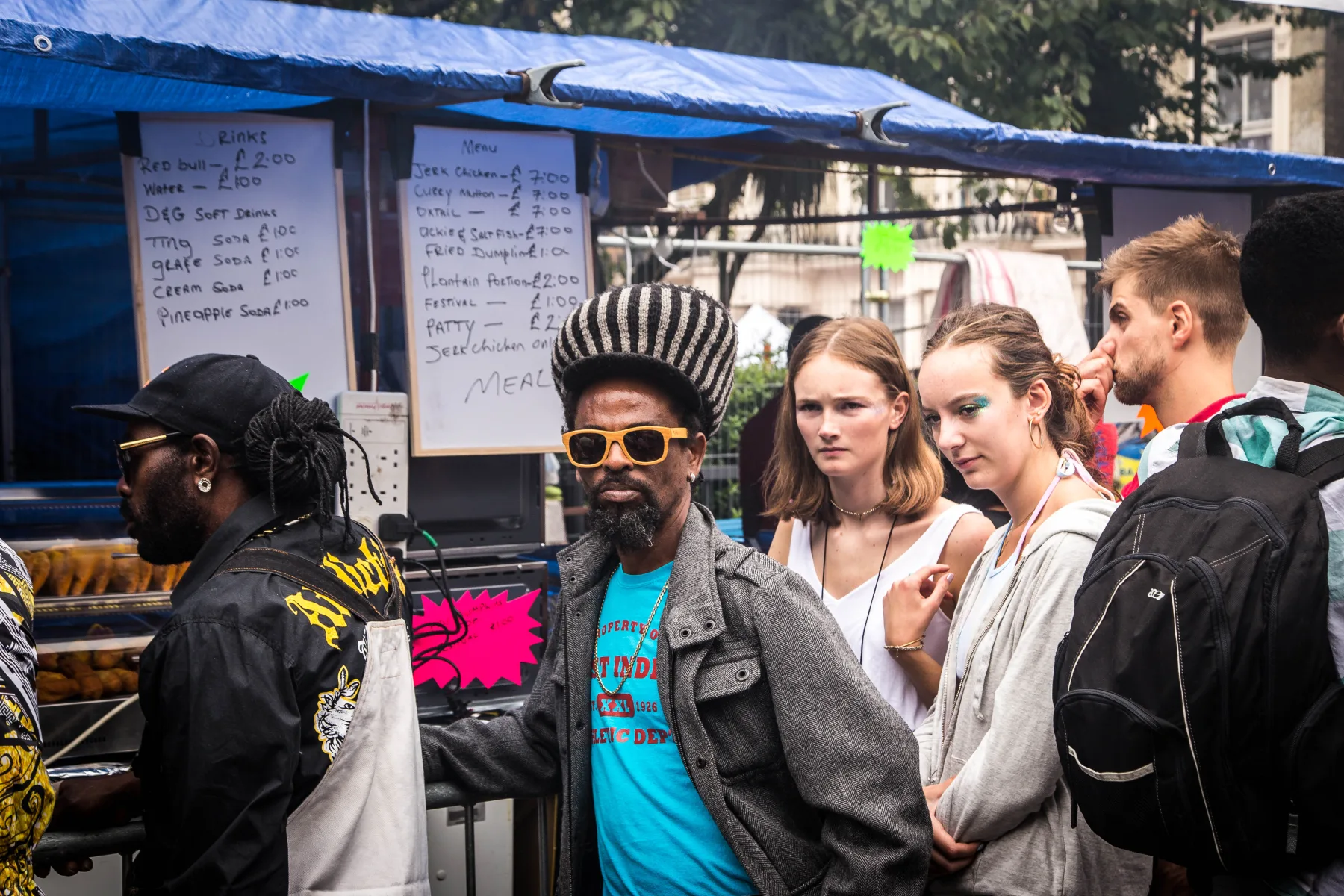
Adrian Scottow / CC BY-SA 2.0
By lunchtime, somebody in your group will announce that they are “not really hungry”.
Give it six minutes.
The smoke will find them. It rolls above the road before you see the grill: pimento, charcoal, fat catching flame. Then comes the menu written in marker pen, the foil trays, the woman at the front of the queue already knowing her order while everybody behind her behaves as if this is the first time they have encountered food.
One friend wants jerk. One wants a roti. Somebody refuses to queue, then asks for some of yours. This is democracy in action, unfortunately.
Carnival food is not catering parked beside the culture. It is part of the culture’s movement. Recipes travelled with Caribbean people, changed with what Britain had available, fed homes, shops, church halls, clubs, protests and late-night sessions — then came out onto the road in pots big enough to require upper-body strength.
The official Carnival food guide puts Jamaican jerk, Trinidadian roti and Guyanese pepperpot in the same breath. That is not a single cuisine. It is a Caribbean conversation happening one street apart.
So no, this is not a ranking. We are not asking rice and peas to compete with doubles like they applied for the same job. This is about reading the road properly: knowing what you are looking at, where some of it comes from and why the people doing the cooking deserve more attention than a quick overhead shot of your tray.
You do not need a map. Follow the smoke.
Start with the jerk pit
The smell is Carnival’s unofficial location pin.
But jerk is not any chicken wearing spicy brown sauce. It is seasoning, smoke, heat and time. Jamaican jerk carries Indigenous Taíno cooking knowledge and Maroon ingenuity; pimento, thyme, Scotch bonnet and the cook’s own balance do the rest. Metal drums have become part of the diaspora method, turning a practical bit of street equipment into a smoking kitchen.
You can taste when the grill has done its work. The edges catch. The smoke sits inside the meat instead of floating politely above it. The pepper arrives with flavour, not just aggression.
Order the chicken if that is what you love. Order pork if it is there. But look beyond the word jerk: festival, rice and peas, plantain, hard food, slaw and gravy are not decorative backing singers. A plate is an arrangement. The person serving it knows where everything belongs.
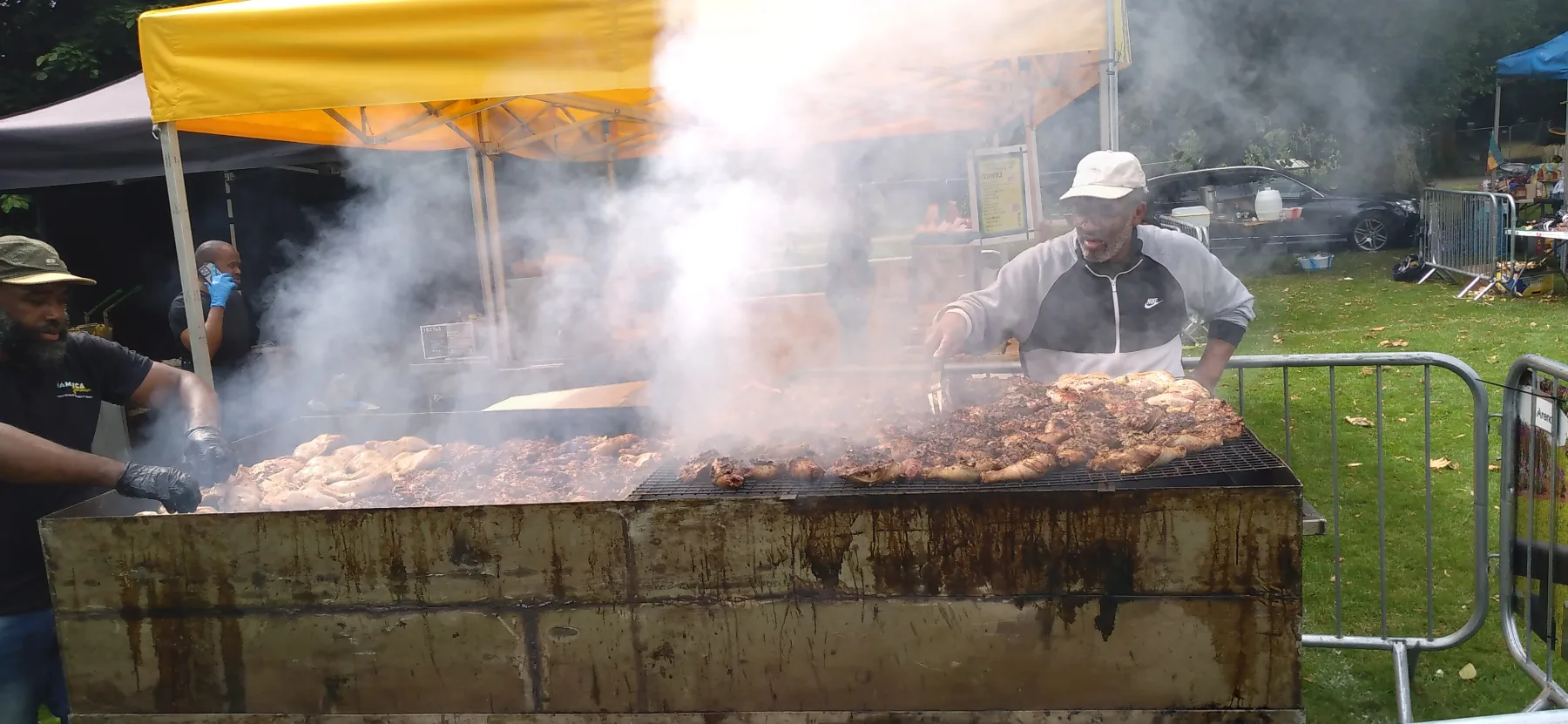
Smoke is an ingredient
This is the scale people forget. Hundreds of pieces on the grill. Heat in your face for hours. Smoke in your clothes. A queue looking at you as though hunger is a personal emergency you created.
The plate may take minutes to disappear. The preparation did not.
Jerk grill, Manchester Caribbean Carnival, 2024 · Rathfelder / CC0
Smoke, pimento, thyme, pepper and technique. Sauce alone cannot do this job.
Coconut, seasoning and proper grains. The plate begins here; it does not merely fill space.
Soft centre, caramelised surface. Everybody says they only want one piece. Nobody means it.
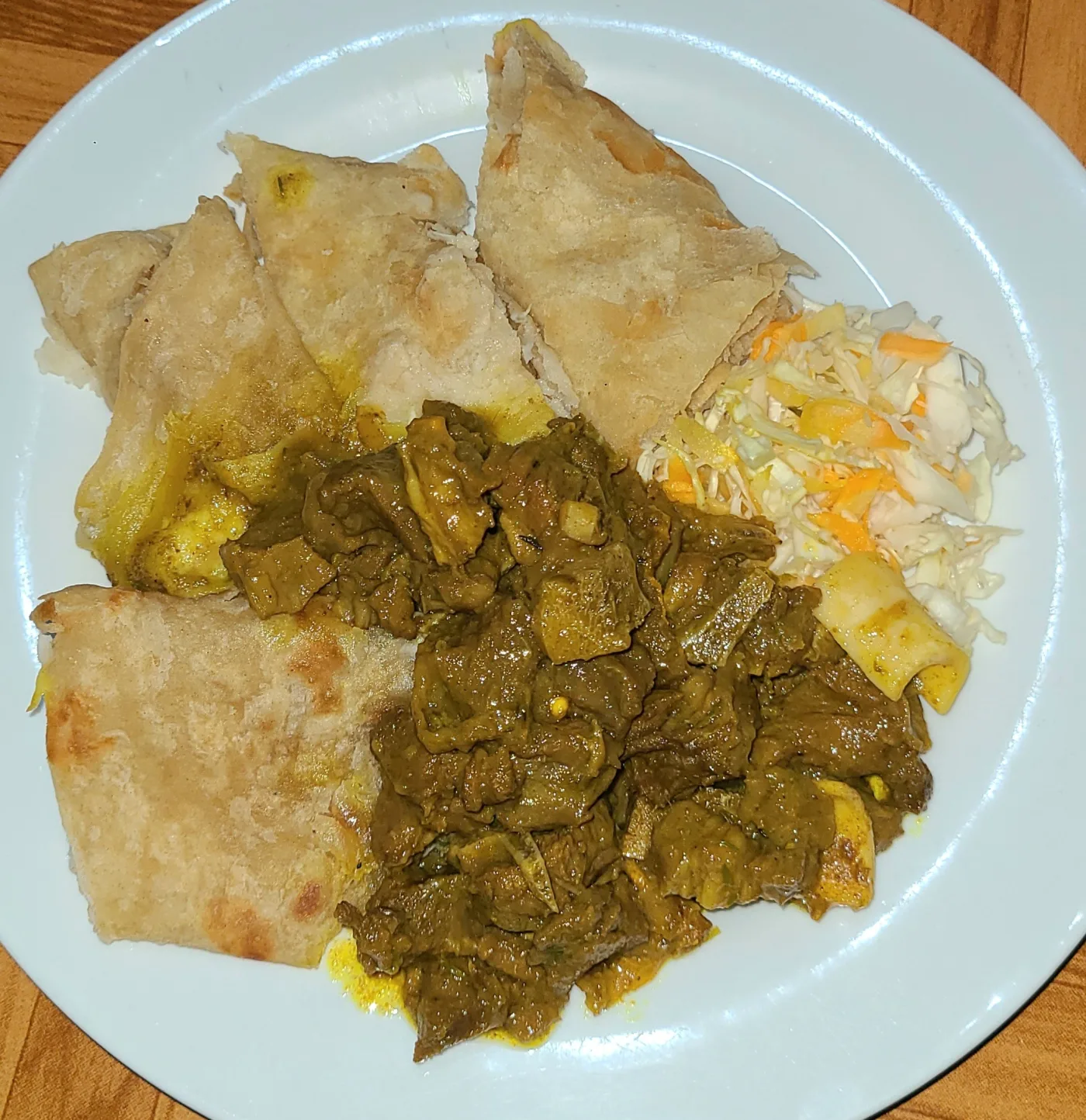
Flaky pastry, spiced filling and the rare Carnival meal you can eat without abandoning your drink.
The Caribbean is not one kitchen
“Caribbean food” is useful right up until it starts making every island sound interchangeable.
Jamaican cooking may dominate the visual language of food at Notting Hill — jerk drums, curry goat, patties, rice and peas — but the road is wider than that. Trinidad and Tobago brings its Indo-Caribbean vocabulary: dhalpuri, buss-up-shut, channa, doubles, pholourie, tamarind, kuchela and pepper that should always be approached with humility. Guyanese pepperpot arrives dark with cassareep, warm spice and slow cooking. Elsewhere are Bajan fish cakes, Grenadian oil down, Antiguan pepperpot, Haitian griot, Dominican plates and newer Black British and African-Caribbean combinations that make sense because London never leaves culture untouched.
That does not mean origins stop mattering. It means tradition can move without becoming vague.
Indo-Caribbean · street-made
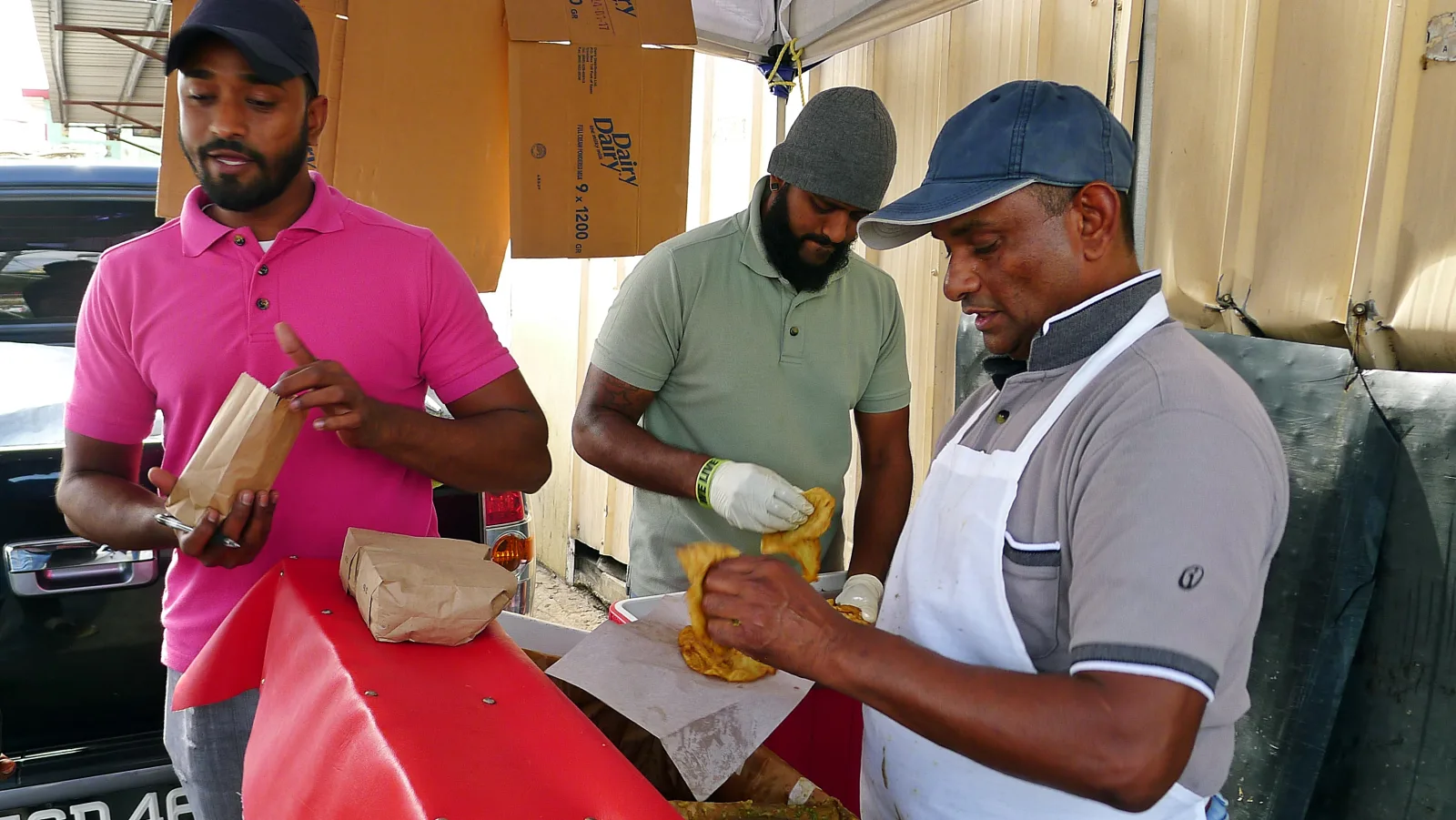
Two bara. One very good idea.
Doubles comes from Trinidad and Tobago: curried channa held between two soft fried bara, finished with chutneys and pepper. It is breakfast, street food, after-party repair and proof that the best engineering often arrives in paper.
Its history sits inside the Indo-Caribbean story. Indian indentured labourers brought ingredients, cooking methods and language to Trinidad after emancipation; roti, doubles and curry became part of the country’s national kitchen rather than a sealed-off inheritance.
If a vendor asks whether you want pepper, this is not the moment for British politeness or misplaced bravery. Answer honestly.
Read the menu by island, history and hand
The same ingredient can carry a different name, seasoning and logic from one territory to the next. Ask what is in front of you. Curiosity is welcome. Treating the whole Caribbean like one big resort buffet is not.
Look for smoke, rice and peas, festival, plantain, escovitch, callaloo and whatever the cook has made their name on.
Indo-Caribbean foodways sit beside Creole cooking: channa, dhalpuri, buss-up-shut, pholourie and serious pepper sauce.
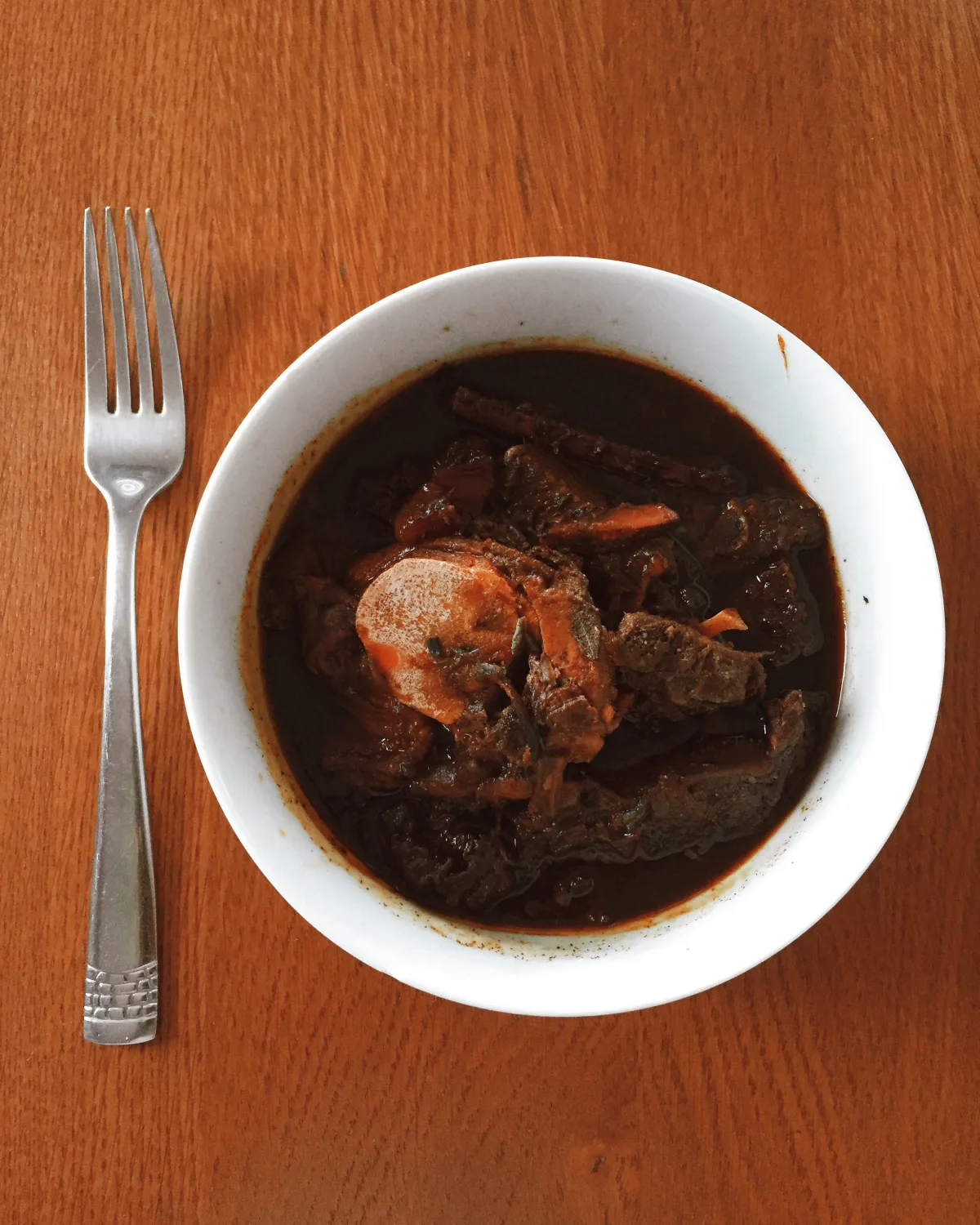
Cassareep gives pepperpot its depth and dark gloss; Guyana’s kitchen holds Indigenous, African, Indian, Chinese and European histories together.
The table was infrastructure
Food held the room where Carnival organised itself
Frank Crichlow opened the Mangrove restaurant on All Saints Road in 1968. It fed people, but that was never the full job. The restaurant became a meeting place for Black artists, organisers, intellectuals and campaigners — and an unofficial base for Carnival itself.
That history matters because it places Caribbean food exactly where it belongs: not in a lifestyle sidebar, but inside the social and political life of the neighbourhood.
A restaurant could be a kitchen, office, refuge, noticeboard and organising space at once. A Carnival stall carries some of that same energy in miniature. People meet at it. Information travels through it. Somebody’s auntie knows somebody you have not seen since last August. You came for a plate and leave with the whole update.
Leave room for the thing you didn’t plan
The big plate is beautiful. So is the small save.
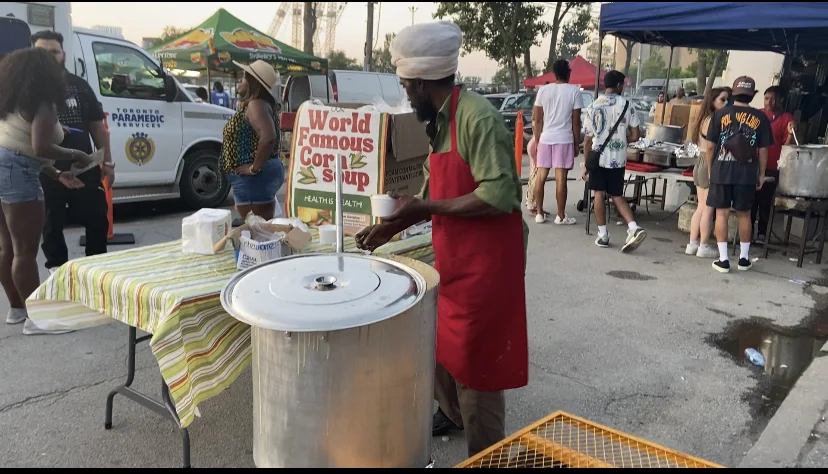
A patty when the parade is moving. Plantain eaten with your fingers while waiting for somebody to come back from the toilet. Pholourie passed around the group. A cup of corn soup when the afternoon starts leaning into evening and your body needs something more persuasive than another rum punch.
Corn soup is built for the road: split peas, corn, ground provisions, dumplings, seasoning, heat. It is both drinkable and unmistakably dinner. The steam alone can restore your faith in the day.
Vegetarian food is not an apology either. Channa, doubles, vegetable roti, callaloo, rice dishes, fried plantain, corn and soups can hold their own without imitation meat performing a rescue mission. Ask about stocks and cross-contamination if you need to; never assume because a dish looks vegetable that somebody’s pot has followed your dietary rules.
The late-day save
Corn soup brings you back
By this point the bass has rearranged your internal organs, your phone is on twelve per cent and the friend who said they were not hungry has eaten half your plantain.
Find the steam. Get the soup. Rejoin society.
Choosing well without making it a military operation
Three rules for a proper plate
A grill in use, pots being worked, food turning over. Carnival is not the day to be seduced by a glossy banner while the kitchen sits suspiciously still.
A moving line tells you people know something. Decide before you reach the front, keep the order clear and do not begin a family conference at the till.
Behind your ten-minute meal are shopping, seasoning, marinating, lifting, licensing, transport, heat and hours on tired feet. Say thank you like you mean it.
Eat Carnival like it belongs here
Not as novelty. Not as a dare measured by how much pepper you can survive. Not as content arranged on the pavement until the food goes cold.
Eat it as part of the same cultural system as the pan, the sound systems and the mas bands: knowledge carried, adapted and handed forward. The cook at the jerk drum and the selector behind the stack understand the same basic principle. Timing is everything. So is knowing your crowd.
By late afternoon, the road will be holding a thousand different meals at once. Smoke above the rooftops. Gravy at the bottom of a foil tray. Pepper sauce applied with either wisdom or consequences. People trading bites, comparing stalls, sending voice notes that begin, “Where are you? I found the food.”
That is the real guide.
Follow the smoke. Order with sense. Ask before reaching into somebody else’s tray.
The road feeds you back.