Notting Hill Carnival 2026
How Steelpan Opened the Road
Before the trucks, the sound systems and the million-strong crowd, a few Trinidadian musicians put pans around their necks, started walking — and west London fell in behind them.
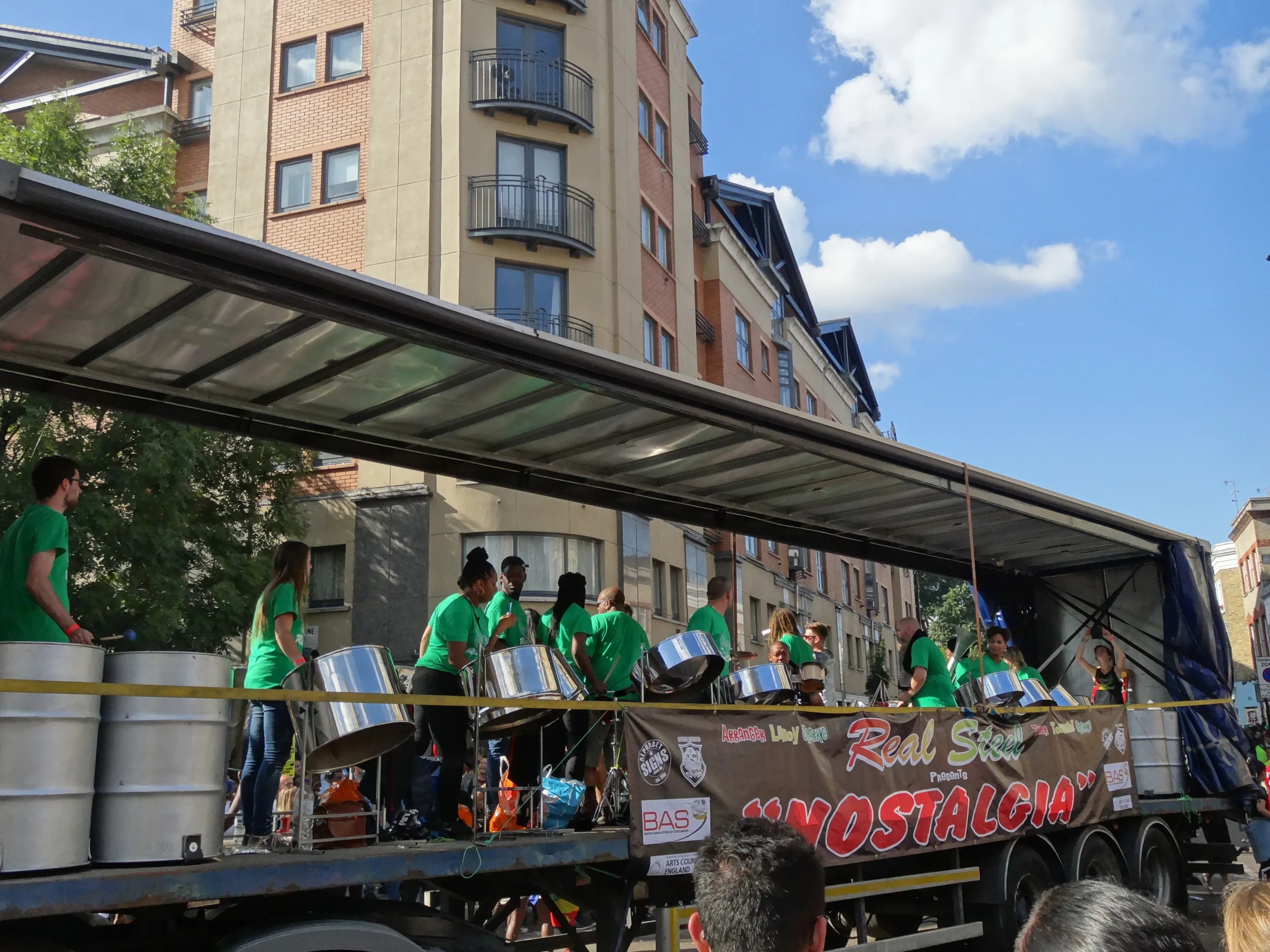
Jonathan Cardy / CC BY-SA 3.0
Steelpan is one of those sounds people think they know in three seconds. Bright. Sweet. Sunny. A little holiday music while somebody brings out the rum punch.
Then you hear a proper steel orchestra.
The bass pans come in low and round. Inner voices start moving underneath the melody. The engine room tightens everything from behind, and players are running two sticks across notes the size of side plates and £2 coins without looking remotely stressed. Suddenly, all that “island vibes” chat looks embarrassingly small.
This is not background music. It is engineering with a waistline.
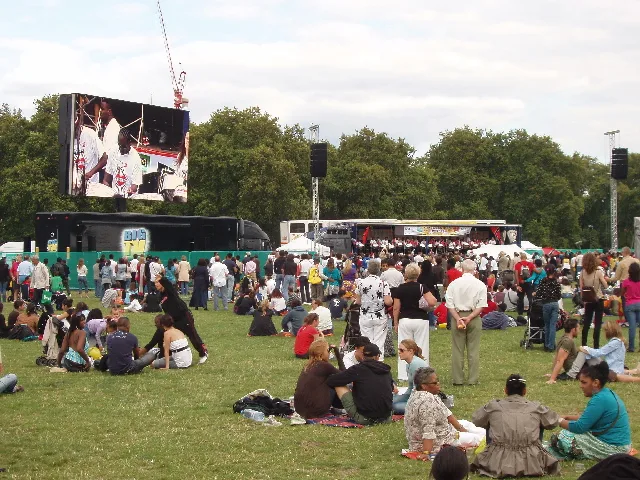
At Notting Hill, you can hear that truth before Carnival has even properly started. On the Saturday evening, while the rest of London is still deciding what shoes it can afford to ruin, the steelbands are already in Emslie Horniman’s Pleasance Park for Panorama: the national competition, the big one, the night when months of rehearsal are reduced to a few breathless minutes under the lights.
In 2026, Junior Panorama begins at 5pm and the main competition at 8pm on Saturday 29 August. Sunday and Monday get the aerial shots, the costumes and the huge crowd numbers. But treating Saturday as the warm-up gets the history the wrong way round.
Pan is not the pre-show. Pan helped make the road possible.
29 August
Emslie Horniman’s Pleasance Park
London W10 5EG
Gates 4pm
Junior Panorama 5pm
Panorama 8pm
Ticket proceeds are distributed among the performing bands, supporting the culture beyond one weekend.
The road did not open itself. Pan gave it a rhythm, and people came out to follow.
Before London, there was invention
Steelpan was developed in Trinidad and Tobago in the 1930s. That sentence is neat. The history behind it is not.
Colonial restrictions on African drumming and later tamboo bamboo did not get rid of rhythm; they forced it to find other materials. Bamboo lengths gave way to biscuit tins, paint pots, dustbins, car parts and other metal that happened to be within reach. Players noticed that different dents and raised surfaces produced different pitches. Then came years of experimentation: sinking, grooving, hammering, heating and tuning until scrap metal could carry a melody.
People sometimes tell this like a miracle performed by one man on one oil drum. Cleaner story, not truer. Pan was collective research and development conducted in panyards, back rooms and communities that were not being handed arts grants or laboratory time. Innovators including Winston “Spree” Simon, Ellie Mannette, Anthony Williams, Neville Jules and Bertie Marshall made different breakthroughs, often at the same time and sometimes in fierce competition.
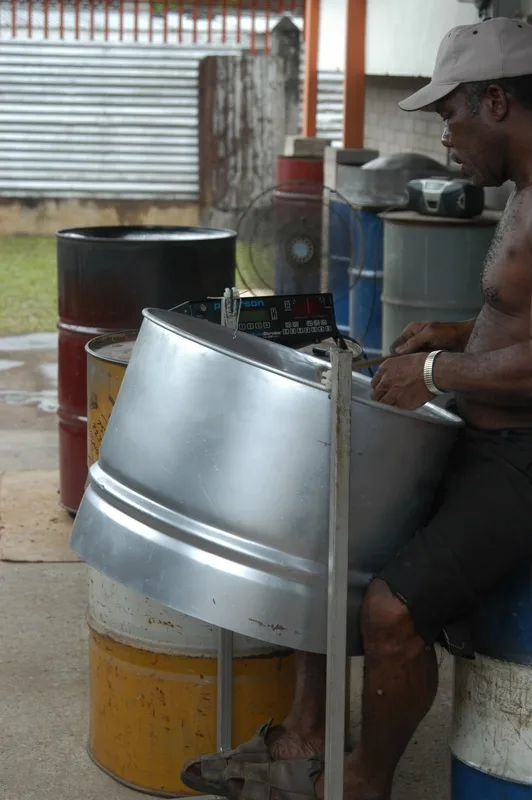
And an oil drum is only the raw material. It is not the finished instrument, in the same way a tree is not yet a cello. A tuner has to shape the bowl, mark out each note, work the metal and balance the fundamental pitch with its overtones. Get it right and the surface sings. Get it wrong and you have, well, a dented barrel and a very long afternoon.
One name.
A whole orchestra.
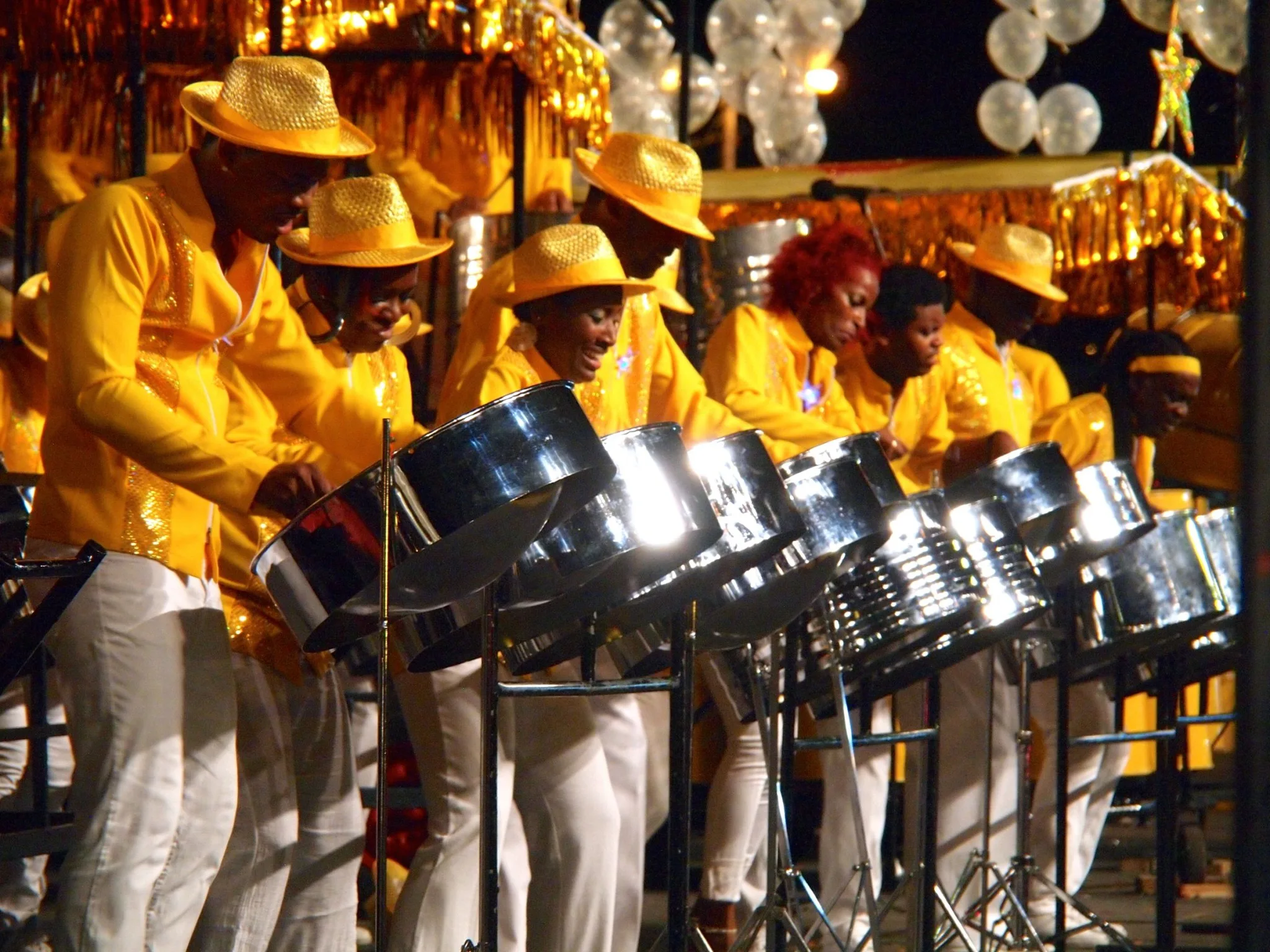
“Steelpan” describes a family, not one identical drum. Different bands use slightly different layouts and names, but the musical job moves from bright lead lines at the top to room-shaking bass at the bottom.
The highest voice, often carrying the melody. Fast, agile and usually the pan people picture first.
Double seconds fill harmony and countermelody — the part that makes the arrangement feel bigger than its tune.
Mid-range pans bring chords, rhythmic drive and body. This is where the orchestra starts to feel properly thick.
Multiple full-size pans carry the low end while iron, drums and percussion lock the whole band into the groove.
Pan arrives in Britain
Britain’s first encounters with pan came before Notting Hill Carnival. Trinidadian dancer and musician Boscoe Holder featured steelpan on his BBC television show Bal Creole in June 1950. A year later, the Trinidad All Steel Percussion Orchestra — TASPO — performed on London’s South Bank during the Festival of Britain.
For many British listeners it was their first time seeing the instrument in person. The official Carnival history says some people looked underneath the pans to check the music was really coming from the metal. Honestly, fair enough. Imagine hearing a chromatic orchestra and being told the raw material used to transport oil.
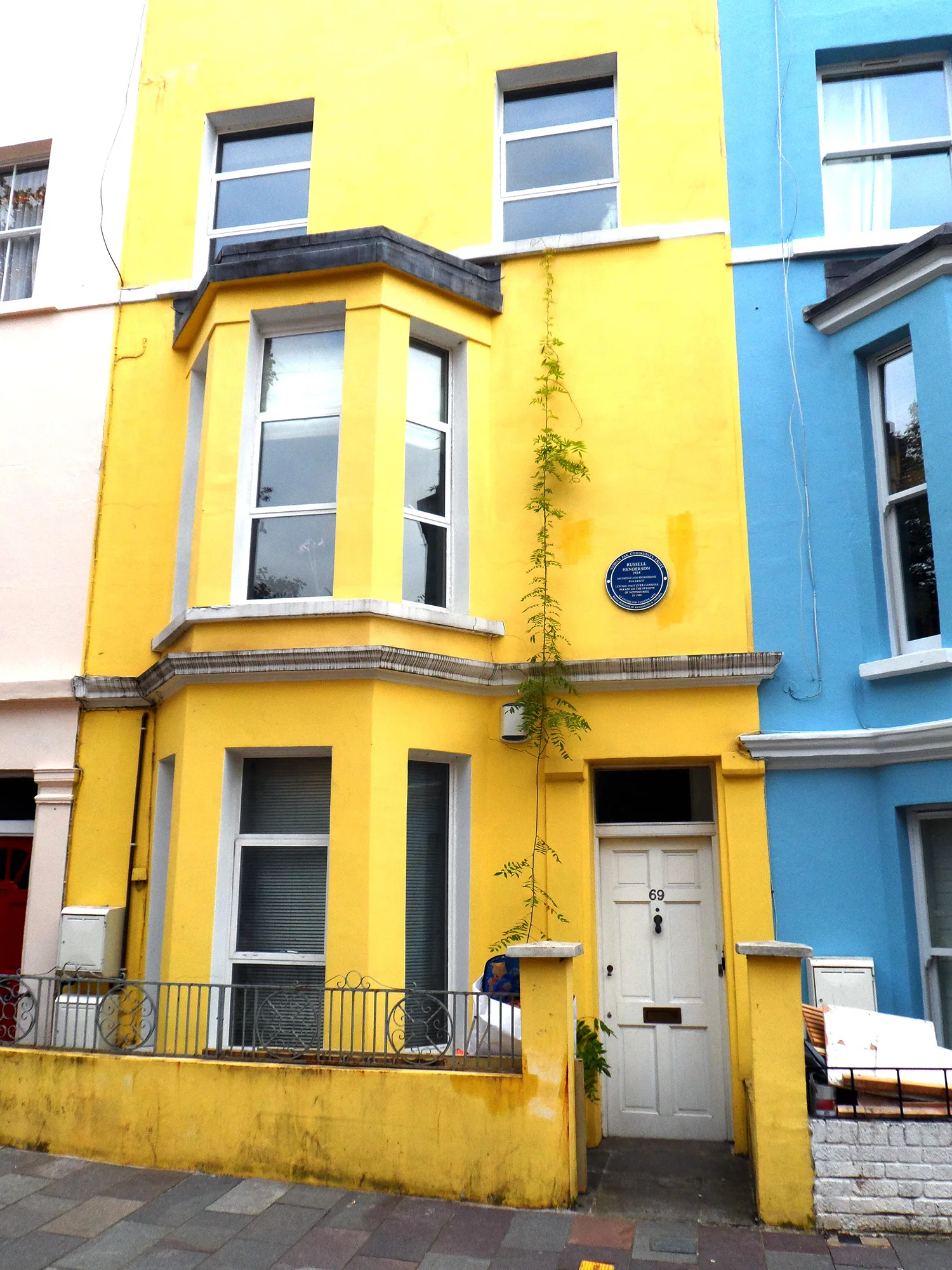
TASPO mattered for another reason. Some of its players stayed in Britain, including Sterling Betancourt. Russell Henderson arrived from Trinidad in 1951 as an already established pianist, and in late 1952 formed a steelband combo with Betancourt and Mervyn Constantine. They worked clubs, broadcasts, private functions and stages where pan still had to prove it was an instrument rather than a novelty.
By the time the sound reached Tavistock Road, it carried Trinidad, migration, musicianship and the quiet audacity of Black artists who had already learned that Britain could enjoy the culture while remaining less enthusiastic about the people who made it.
Steelpan develops in Trinidad and Tobago through collective experimentation with metal, pitch and rhythm.
Boscoe Holder brings pan to British television on the BBC’s Bal Creole.
TASPO performs at the Festival of Britain and brings the sound face-to-face with London audiences.
Russell Henderson’s players put pans around their necks and walk. The crowd follows.
Thirteen official steelbands carry the tradition into Carnival’s Diamond Jubilee year.
Then Russell started walking
Carnival history does not have one tidy starting gun. Good. Culture is not a company incorporation; it does not arrive with a single founder and a laminated certificate.
Claudia Jones’s Caribbean Carnival at St Pancras Town Hall in January 1959 was an indoor, consciously Caribbean response to racism and the violence faced by Black communities after the 1958 Notting Hill attacks. Rhaune Laslett’s neighbourhood street events in west London came through a different route, built around children and the area’s many communities. Both histories matter. Neither needs shrinking to make room for the other.
According to Notting Hill Carnival’s own history, Laslett invited Russell Henderson’s band to a children’s event on Tavistock Road in April 1964. The pans were strapped around the players’ necks, which meant the band could move. An encore was called for. Henderson decided to “make ah rounds”.
So they walked.
A conga line formed behind them. People heard the familiar sound, came out of their houses and joined in. What had been a local event became a procession. By 1966, Laslett’s week-long Notting Hill Fayre and Pageant was on the streets; the Caribbean presence and meaning of Carnival would deepen in the years that followed.
This is what it means to say steelpan opened the road. Not that one afternoon accounts for every root of Carnival. It means pan supplied the action that street culture needs most: movement. The music did not wait for an audience to assemble politely in front of it. It went looking for people.
Music made to move
Early road pans were portable enough to hang around the neck. As the orchestra developed, deeper instruments needed more metal, more pans and eventually wheels, racks and trucks. The technology changed; the instinct did not.
Pan still sounds different when it is moving through open air, bouncing off shopfronts and terraces, gathering people as it goes.
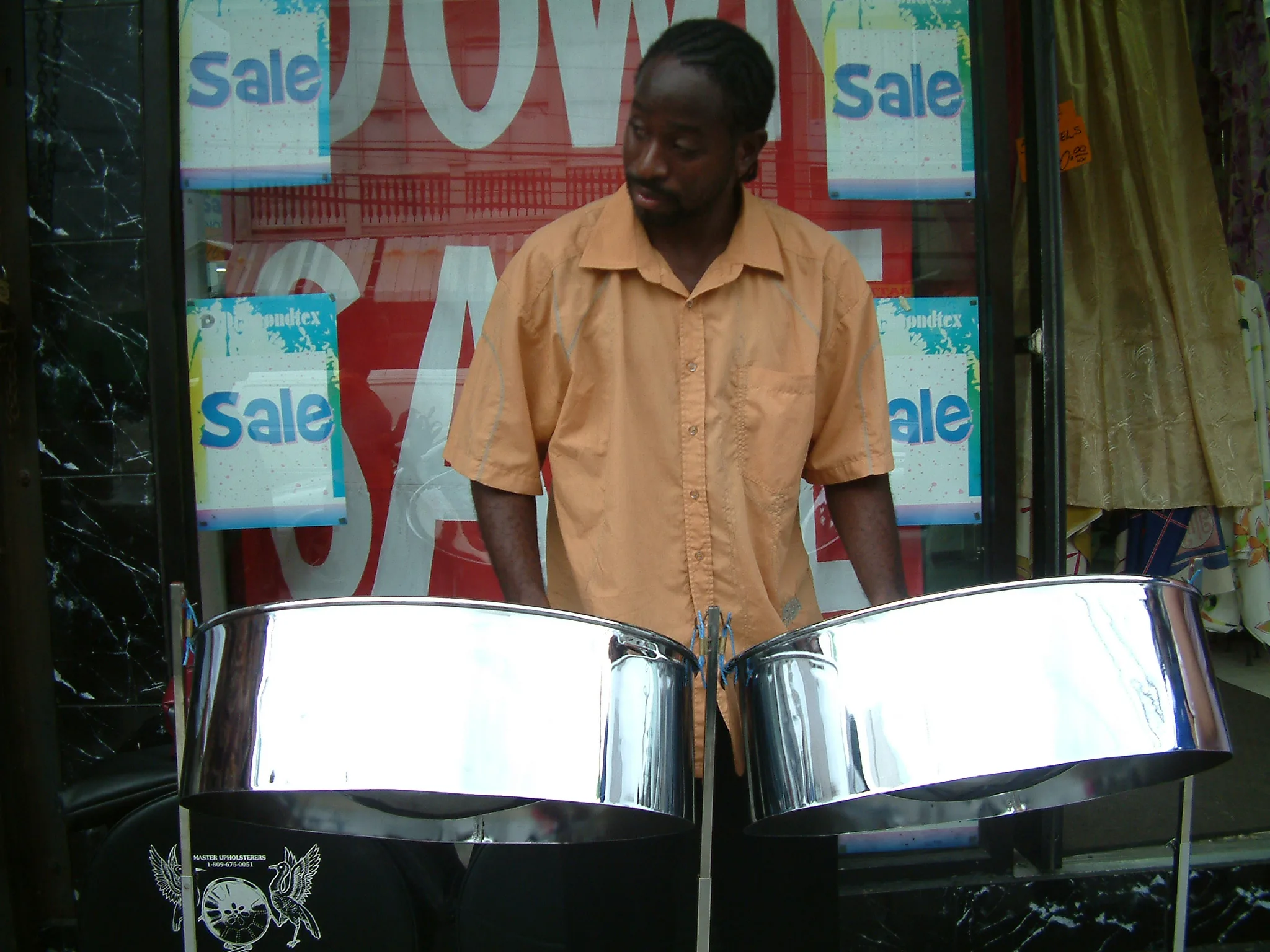
Pan player, High Street, Trinidad and Tobago · Shanel, 2007 · CC BY-SA 3.0
Panorama is where the polite stereotypes go to die
If your entire relationship with steelpan is a school-hall version of “Under the Sea”, Panorama would like a word.
A band takes one tune — usually from the current calypso or soca season — and rebuilds it as an orchestral arrangement. Melody gets stretched, reharmonised, broken apart and brought back. Tempos shift. Sections answer one another. The engine room pushes from behind while the bass players move across ranks of full-size pans. An arranger has to make the whole thing difficult enough to win, but musical enough to land.
Then dozens of people have to remember it together.
That last bit is easy to understate. Rehearsals run for weeks in the panyard. Passages are drilled until hands know where to go after brains have become useless from tiredness. Somebody is always arriving from work. Somebody has school in the morning. Somebody is feeding everybody. The glamorous image is the band under competition lights; the culture is all the evenings that got them there.
Competition, yes.
Community, always.
Panorama is judged, serious and gloriously competitive. It is also the public face of work that happens all year: teaching children, training arrangers, keeping instruments tuned, finding rehearsal space and making sure knowledge passes between generations.
For 2026, Junior Panorama and the main competition share the same stage and the same night. That is more than scheduling. It lets young players see the line between learning their first phrase and carrying an orchestra.
The panyard is the bit you don’t see
Notting Hill Carnival lists 13 official steelbands for 2026: Ebony, Glissando, Mangrove, Metronomes, Pan Nation, Panectar, Pantonic, RASPO, Real Steel, St Michael and All Angels, Stardust, Steel Pan in Motion and UFO. Some are west London institutions. Others travel in from elsewhere in the country. All of them arrive carrying more than the tune they play on the day.
Ebony · Glissando · Mangrove · Metronomes · Pan Nation · Panectar · Pantonic · RASPO · Real Steel · SMA3SO · Stardust · Steel Pan in Motion · UFO
A steelband needs somewhere to live. A panyard is rehearsal room, classroom, workshop, storage facility, social club and, on certain long August nights, a test of everybody’s remaining patience. It is where children learn to hold sticks, teenagers learn to lead a section and older players pass down knowledge that has never depended on institutions understanding its value.
That is why the language of “preserving” pan can feel a little off. Preservation makes it sound like something behind glass. These bands are arranging new tunes, training new players and arguing about tempo right now. The tradition is alive enough to be late for rehearsal.
And it is why losing rehearsal space, funding or access to a yard is not a minor admin problem. You are not just misplacing a music lesson. You are breaking the chain that gets a child from one note to the road.
Listen past the shine
Steelpan is beautiful to look at, which can be a trap. The chrome catches light. The mallets blur. Everybody reaches for words like joyful, uplifting and infectious — all true, all slightly inadequate.
Listen underneath that shine and you hear a more complicated British story. You hear an instrument invented by working-class Trinidadians under colonial rule. You hear Caribbean musicians crossing the Atlantic and being asked to prove that their craft was serious. You hear Black London making public space feel like home. You hear children being taught by people who were once taught by somebody who remembers when the band still carried pans around its neck.
You also hear pleasure. Proper pleasure. Not the respectable kind that needs a panel discussion before anyone is allowed to dance.
That balance matters. Pan does not need to be turned into homework to deserve respect. Its history is political because Black life in postwar Britain was political. Its craft is technical because tuning steel into an orchestra is technical. And it is fun because Carnival is allowed to be fun.
So when the first notes rise over west London in August, do not treat them as a pretty bit of heritage before the “real” music begins. The real music is already there. It has been there from the start.
Pan struck.
The road answered.